

Pet insurance • Practical decisions

Insurance for a household of cats

Coordinate the policies without assuming your cats share a deductible, limit or medical history.

Tabby cat resting beside its owner on a knitted blanket
✓ Policy-first ✓ Independent ✓ Useful checks
Direct answer
You can insure several cats with one provider, but a shared account does not necessarily mean shared insurance. Build a separate policy record for each cat and test whether your household could fund simultaneous claims. A multi-pet discount matters only after each cat’s coverage works.
Pet profile

Start with the day two cats need care

Imagine two cats need unrelated treatment in the same week. One has already used its deductible; the other has not. The question is not simply whether both names appear in the app. You need to know which policy pays each bill, what you must advance to the clinics and how much of each claim remains yours.

Create a small household ledger with one row per cat: policy number, annual premium, deductible type, amount already credited, reimbursement basis, remaining benefit and claim contact. Keep the emergency cash total below the individual rows. This exposes a funding gap that a combined monthly payment can hide.

Quotes

Confirm what is actually separate

Item Question to settle
Deductible Does each cat satisfy its own amount, or does the written contract explicitly pool eligible expenses?
Limit Can one cat exhaust protection intended for another, or are balances individual?
Discount Which policies and premium components qualify, and what happens if one cat leaves?
Records Can the clinic and insurer identify the correct cat on every invoice and history?

That is a concrete example, not a rule that every insurer uses. Ask other providers to describe their own arrangement in writing rather than transferring this design to a household or group-branded offer.
What to know

A reserve exercise for the household

Illustration only: Cat A has $1,200 of eligible charges with its annual deductible already satisfied. Cat B has $900 of eligible charges and a $300 deductible remaining. Assume both fictional policies reimburse 80% after subtracting the remaining deductible, with no other exclusions or limits. Cat A’s payment would be $960; Cat B’s would be $480. The household keeps $660 of the $2,100 bill, before premiums.

If both clinics require payment before reimbursement, the initial cash need is still $2,100. A household with $700 available could cover the eventual retained amount in this example and still be unable to pay at checkout. Replace these assumptions with the actual payment formula and clinic terms. The figures are not prices or estimates for your cats.

What to know

Different histories may justify different choices

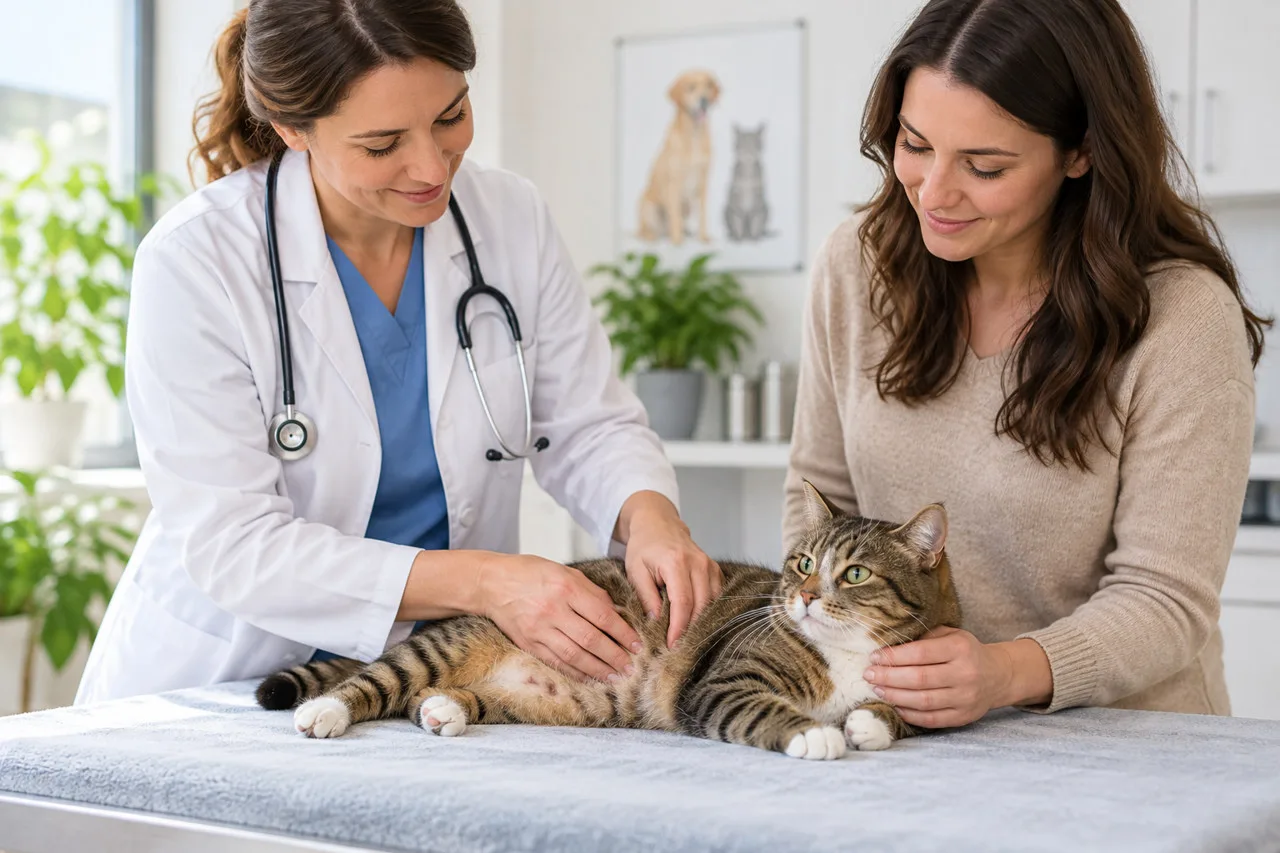
Veterinarian examining a tabby cat beside its owner
Keep each cat’s own treatment record, even when a household uses one clinic.

Do not duplicate settings automatically. An older cat already receiving treatment needs a record-by-record exclusion review; a newly adopted kitten needs accurate starting records and an effective-date check. If one cat already has useful coverage for an ongoing condition, moving it solely to obtain a household discount may sacrifice more than the discount saves.

Keep a single administrative calendar if that helps, but record renewal dates individually. When a discount changes, compare the revised household cost with the cost of leaving the established policy intact. You do not have to move every cat at once to make a sensible decision.

Claims

What “100% reimbursement” would still leave open

If an offer advertises a full reimbursement percentage, ask what amount the percentage applies to. Excluded services, deductibles, benefit schedules and caps may still leave a balance. “All cats covered” also does not mean every condition is covered. Have the provider work through two separate invoices, including one with a fee that is excluded.

Before purchasing, reconcile the number of cats insured with the number of declarations or schedules received. Check names and identifying details against veterinary records, then save an individual claim folder for each animal.

Evidence

Sources and policy context

These public references support the consumer or veterinary context. Named insurer details were checked in official product materials; the policy offered for your pet and state determines the actual terms.

Next step

Compare Current Pet Insurance Rates

Check current options for your pet and location, then compare the policy details, exclusions, costs, and eligibility before choosing.

Compare the policy before you choose Check the actual offer, exclusions and out-of-pocket terms.
See Rate Options